
Wet Nano Classifier
Wet Nano Classifier
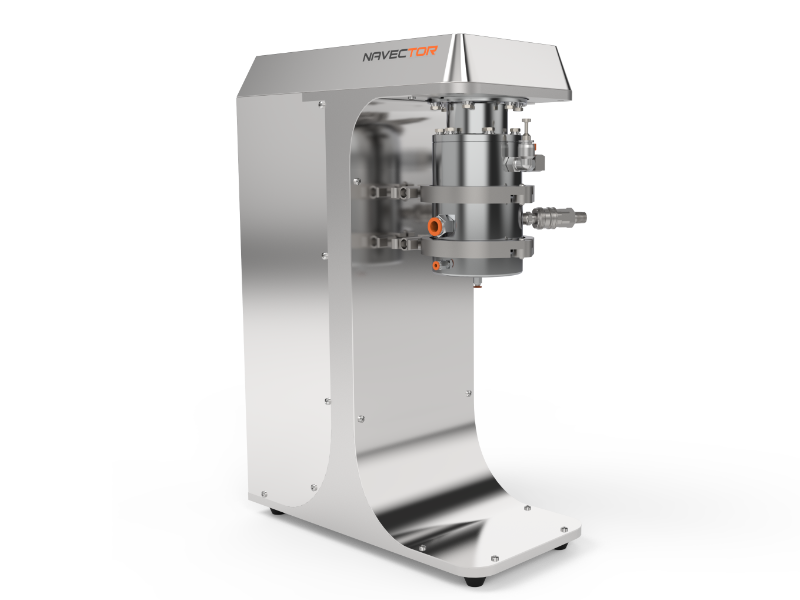
【Product Overview】:The core classification principle of this equipment is based on the perfect combination of dynamic centrifugal sedimentation and laminar flow separation technologies, ensuring a precise, controllable, and gentle separation process without shear damage.
Product Introduction
Principle Introduction
The core classification principle of this equipment is based on the perfect combination of dynamic centrifugal sedimentation and laminar flow separation technologies, ensuring a precise, controllable, and gentle separation process without shear damage. It achieves high-precision, low-damage, and high-efficiency classification in a wet environment, meeting the stringent requirements of next-generation materials for monodispersity, purity, and morphological integrity.
Classification Process
- Establishment of the Centrifugal Force Field:
The slurry enters the interior of a high-speed rotating drum. Under the action of strong centrifugal force, particles begin to settle according to their size and density differences. Larger/heavier particles experience greater centrifugal force. - Laminar Separation and Precise Cut:
Inside the drum, a specially designed laminar separation zone is present, where the liquid flow is highly stable (laminar).
Particles of different sizes follow different trajectories under the balance of centrifugal force and fluid drag.
- Particles larger than the cut size: Overcome the fluid drag and settle on the drum wall, discharged or collected continuously as “coarse material.”
- Particles smaller than the cut size: Carried by fluid drag, remain suspended in the liquid, and overflow from the drum as “fine material.”
Equipment Advantages
- High Flexibility: Can operate as a standalone unit for batch processing or be easily integrated into continuous automated production lines.
- Closed-Loop Option: Coarse materials can be returned to the upstream mill for reprocessing, improving raw material utilization and achieving zero waste.
- Stable Process Scale-Up: From laboratory to pilot to large-scale production, the classification principle remains consistent, and process parameters can be precisely scaled.
Product Specifications
| Rotor Tip Speed | ≈2~20 m/s |
| Classified Particle Size | 0.5~20 μm |
| Processing Capacity | Up to 5 L/h |
| Classification Chamber Volume | Approx. 50 ml |
| Main Unit Weight | W200 × D360 × H600 mm, 20 kg |
| Control Box | W300 × D330 × H200 mm, 10 kg |
| Rotor Material | Resin |
| Stator Material | SUS304 / SUS316L |
| Power Supply | AC100V, 50/60 Hz, 1000 W |
Application Fields
Electronic materials: MLCC dielectric slurries, electrode slurries, electronic ceramic powders, phosphors, conductive pastes, etc.
Battery materials: Cathode materials (LFP, NCM, NCA, etc.), anode materials (graphite, silicon-carbon), solid-state electrolyte powders, and conductive additives—dispersion and classification.
Abrasive slurries: CMP polishing slurries (silica, ceria, etc.), precision micro-grinding powders, diamond suspensions, etc.
Other high-value-added materials: pharmaceutical nanocrystals, high-end pigments, functional coating materials, and more.
Tags:
Flowing: