
Does Lactose Powder Clump During Sieving? Engineers Teach You to Use “Airflow” to Break Agglomerates (Practical Guide for Pharmaceutical Sieving)
Anyone who has worked on lactose powder sieving in the pharmaceutical industry has likely encountered a typical issue:
A powder labeled as 50 μm ends up showing a distribution concentrated in the 80–150 μm range after sieving.
Many people’s first reaction is “abnormal particle size,” but from an engineering perspective, the more common cause is actually:
Powder agglomeration, which leads to distorted sieving results.
Based on frontline sieving engineering experience, this article systematically analyzes the challenges and solutions of lactose powder sieving from six dimensions: What / Why / Who / When / Where / How.
Ⅰ. What | What is a small negative-pressure airflow sieve?
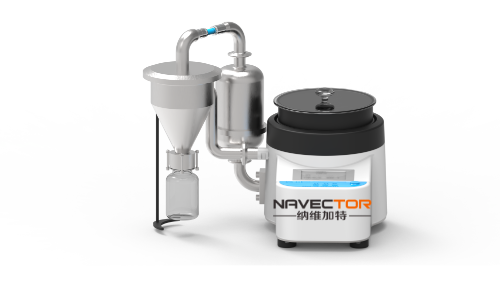
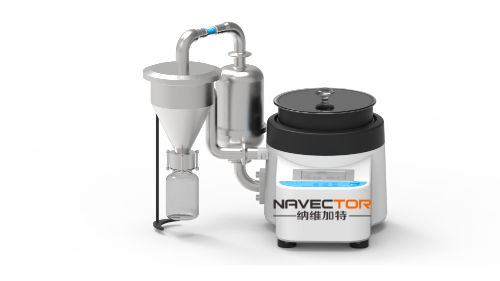
A small negative-pressure airflow sieve is a fine sieving device based on aerodynamic principles. Its core logic is:
Using airflow to disperse particles before sieving, rather than relying on mechanical vibration.
Key technical features include:
Applicable particle size range: ≥10 μm
Single sieving time: 2–3 minutes
Sieving method: Air jet + negative-pressure suction
Adjustable parameters: Sieving time, negative pressure, nozzle airflow velocity (all digitally controlled)
The device uses airflow to break apart agglomerated particles, allowing the powder to participate in sieving in a “single-particle state,” thereby obtaining a true particle size distribution.
Ⅱ. Why | Why must lactose powder use an airflow sieve?
1. Lactose powder is naturally prone to agglomeration
Lactose powder is a typical hygroscopic material. When environmental humidity ≥60%, liquid bridges easily form on particle surfaces, causing micron-scale particles to stick together.
2. Traditional vibrating screens cannot solve agglomeration
The core function of vibrating screens is “classification,” not “dispersion.”
For fine powders in the 10–100 μm range:
Vibration energy is insufficient to break agglomerates
“Pseudo-coarse particles” are easily formed during sieving
Typical manifestation:
Labeled 50 μm powder → sieving result shifts to 80–150 μm
Data fluctuation range: ±10% or even higher
3. Airflow sieving enables “true particle size restoration”
The airflow sieve generates shear forces through high-speed airflow to break agglomerates, and uses a negative-pressure system to carry fine particles through the mesh for precise classification.
Actual engineering data comparison:
| Sieving method | Particle size deviation | Data repeatability |
| Vibrating screen | ±10%–15% | Poor |
| Airflow sieve | ±3%–5% | High consistency |
Conclusion:
The airflow sieve solves the “particle dispersion problem,” not just the sieving problem.
Ⅲ. Who | Who must use an airflow sieve?
The following scenarios are recommended to prioritize airflow sieving:
Pharmaceutical QC laboratories (particle size testing and release)
Process engineers (verification of sieving parameters)
Quality management personnel (batch consistency control)
Applicable material characteristics:
Particle size range: 10–100 μm
Hygroscopic and prone to agglomeration
High requirements for sieving repeatability (e.g., GMP environments)
Ⅳ. When | When must it be used?
It is recommended to use an airflow sieve in the following four situations:
1. Particle size testing (release level)
When error must be controlled within ±5%, traditional vibrating screens are difficult to meet the requirement.
2. Obvious powder agglomeration
Manifestations include:
Forms clumps when squeezed by hand
Frequent mesh clogging
3. Large batch-to-batch data fluctuations
If repeated sieving deviation of the same material exceeds 10%, it indicates that agglomeration has not been resolved.
4. GMP audit or validation stage
It is necessary to ensure that sieving results have:
Repeatability
Traceability
Standardized operation records
Ⅴ. Where | Which industries is it suitable for?
In addition to the pharmaceutical industry, small negative-pressure airflow sieves are widely used in:
Food industry: milk powder, starch, food additives
Fine chemicals: pigments, coating powders
New materials: powder coatings, functional powders
Common characteristics:
Fine powders (10–100 μm) + prone to agglomeration + high-precision sieving requirements
Ⅵ. How | How to select and use?
1. Key parameters for equipment selection
(1) Mesh aperture selection
Recommended principle: mesh size = target particle size × (1.1–1.2)
(2) Negative pressure range
Recommended range: -2 kPa to -10 kPa
Note: Stability of negative pressure is more important than the absolute value
(3) Nozzle airflow adjustment capability
Recommended features:
Multi-level adjustment (≥3 levels)
Continuous adjustment is preferred
2. Standard operating procedure
Typical steps:
Connect to a vacuum cleaner or negative-pressure system
Set sieving time (2–3 minutes)
Adjust negative pressure and nozzle airflow
Start the sieving process
Collect undersize material and record data
3. Common problems and solutions
Problem 1: Excessive negative pressure
Consequences:
Fine powder is directly sucked away
Particle size results become smaller
Solution:
Gradually increase from low negative pressure to find a stable range
Problem 2: High environmental humidity
When humidity >60%, agglomeration significantly increases
Solution:
Control environmental humidity at 40%–55%
Problem 3: Misuse of vibrating screens for precision analysis
Consequences:
Poor data repeatability
Deviation can exceed 15%
Solution:
Prioritize airflow sieving for precision analysis scenarios
Ⅶ. Engineering practice summary
From an engineering perspective, the core issue of lactose powder sieving is not “insufficient sieving efficiency,” but:
Agglomeration masking the true particle size distribution.
The small negative-pressure airflow sieve achieves the following key values through airflow dispersion:
Eliminates agglomeration effects
Improves sieving accuracy (error controlled within ±3%–5%)
Shortens testing time (2–3 minutes per test)
Meets GMP consistency requirements
Ⅷ. Real case reference
A pharmaceutical company’s lactose powder sieving test data:
Using vibrating screen:
Deviation between two tests: about 12%
After switching to airflow sieve:
Data deviation: stabilized within ±3%
Single test time: reduced from 10 minutes to 3 minutes
Conclusion:
Stability of sieving results improved by approximately 70%
Testing efficiency improved by about 3 times
Ⅸ. Conclusion
For agglomeration-prone fine powders such as lactose powder:
The essence of sieving is not “classification,” but “disperse first, then classify.”
The core value of the small negative-pressure airflow sieve lies in:
Restoring the true particle state and improving data reliability at the source.
If further equipment selection or parameter matching is required, the following information can be provided for engineering evaluation:
Particle size range (μm)
Throughput (kg/h or testing frequency)
Whether it is used for quality inspection (GMP requirements)
Based on specific working conditions, targeted sieving solutions and parameter recommendations can be provided.
Tags:
Flowing: